12.04.2010
Hubble Ultra Deep Field 3D
A beautiful video made from the Hubble peering into the blackest of black space.
Hubble Ultra Deep Field 3D
Labels:
3D,
astronomy,
european space agency,
hubble,
nasa,
space,
Ultra Deep Field
11.27.2010
Ununquadium: Element 114
Named Ununquadium, the latest addition to the periodic table is an artificial radioactive element that is the heaviest know. The nucleus decays to lead and the element is known to stay stable for approximately 2.6 seconds before decaying.
Element 114 on the brink of recognition - physics-math - 24 June 2010 - New Scientist
http://en.wikipedia.org/wiki/Ununquadium
Photo from the Knight Science Journalism Tracker
Labels:
atom,
decay,
lead,
math,
nucleus,
periodic table,
physics,
radioactive elements,
ununquadium
10.09.2010
BBC News - US experiment hints at 'multiple God particles'
The Higgs Boson is the subatomic particle that physicists theorize as the particle responsible for attributing mass. However, it has yet to be detected. Summer results from Fermilab, the LHC's US rival, suggest physicists could be hunting five particles, not one. The idea of multiple Higgs-like bosons is supported by results gathered by the DZero experiment at the Tevatron particle accelerator
"The DZero results showed much more significant "asymmetry" of matter and anti-matter - beyond what could be explained by the Standard Model.
Bogdan Dobrescu, Adam Martin and Patrick J Fox from Fermilab say this large asymmetry effect can be accounted for by the existence of multiple Higgs bosons."

Images from CERN, AAAS
10.08.2010
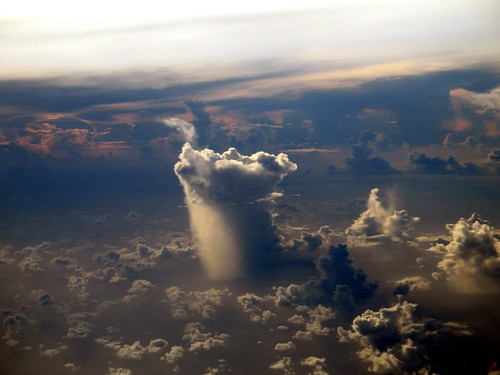
Understanding Clouds: How Much Do We Know?
Clouds are more than just the muse of a poet. They play a major role in climate change yet there are still many unanswered questions. Clouds are known to be the result of "a complex interplay of fluid dynamics, turbulence, convection and mixing" that are not exactly scalable or easy to predict. Click the link below and hear a podcast on what we know and what we don't.
The Complex Physics of Clouds: Scientific American Podcast
Image by Barto
The Complex Physics of Clouds: Scientific American Podcast
Image by Barto
9.18.2010
High Fructose Corn Syrup: Sugar May Be Bad But This Sweetener Is Far More Deadly
A great article by Dr. Mercola about why consuming high levels of high fructose can have deadly effects. From Dr. Mercola:
"There are two reasons fructose is so damaging:
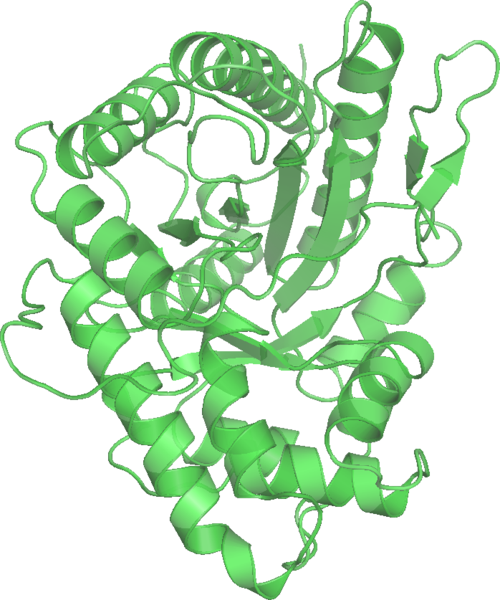
1. Your body metabolizes fructose in a much different way than glucose. The entire burden of metabolizing fructose falls on your liver.
2. People are consuming fructose in enormous quantities, which has made the negative effects much more profound."
Dr. Joseph Mercola: Sugar May Be Bad But This Sweetener Is Far More Deadly
Image: http://en.wikipedia.org/wiki/User:Zephyris
9.17.2010
BBC News - First images from Nasa's Wise infrared sky probe
Have a look at some of the first images from Nasa's Wise infrared sky probe...beautiful.
BBC News - First images from Nasa's Wise infrared sky probe
6.19.2010
Scientists Identify Gene Linked to Aging in Humans
Scientists believe that they have identified the gene process that is linked to aging and the results are very interesting. For example, people age at different rates as programmed by DNA.
A structure called a telomeres, inside the gene seems to be the candlestick that is burnt by time. As cells divide and are continually replaced, the wick of the telomere will continue to shorten. Inheritance dictates how long the telomere is to begin life and the rate of shortening also seems to be influenced by inheritance.
Professor Tim Spector from King's College London and director of the TwinsUK study, who co-led this project, added: "Genetically susceptible people may age even faster when exposed to proven 'bad' environments for telomeres like smoking, obesity or lack of exercise - and end up several years biologically older or succumbing to more age-related diseases."
Labels:
aging,
biology,
dna,
gene therapy,
genes,
genetic advances,
genetics,
telomere,
Tim Spector
6.11.2010
Half Human and Half Virus; A New View
I have been sitting on this, trying to make sense of it. Basically, we are the result of a DNA virus. Have a great weekend!
Seriously, some interesting facts about what you are:
1. Scientists expected 100,000 genes in the human DNA, we found 20,000
2. 34% of those 20,000 genes are considered "junk" because they copy themselves but serve no function.
3. Half of the human genome can be traced to a virus.
4. The virus genes have shown to be vital to the formation of specific organs in the human body.
In short, it is interesting to note that retroviruses that have symbiosis with our DNA may have helped to shape our evolution and development.
I, virus: Why you're only half human - life - 29 January 2010 - New Scientist
Labels:
dna,
evolution,
genes,
genetics,
human body,
junk dna,
retrovirus,
symiosis,
virus
6.06.2010
Doctors able to 'print' new organs for transplant patients
This interesting new device is a 3D bio-printer that is capable of creating arteries and veins on a cellular level. Future iterations of the device can allow scientist to recreate organs that layers cellular building blocks to create usable organs.
Doctors to be able to 'print' new organs for transplant patients | Mail Online
Labels:
arteries,
biotechnology,
cells,
organs,
technology
5.08.2010
Scientists Tap Volcano Power
Scientists have discovered how to tap the geothermal energy of the Earth. With 17,000 islands ranging from the Indian Ocean to the Pacific Ocean, hundreds of active volcanoes represent close to 40 percent of the world's geothermal energy potential.
One geothermal plant already exists in Kamojang, Java. Built in 1982 can convert volcanic heat into electricity at much lower costs and with less pollution than coal plants.
A significant ($12 Billion) amount is required to further the technology, but tapping geothermal energy is a viable option to fossil fuels.
Indonesia aims to tap volcano power
One geothermal plant already exists in Kamojang, Java. Built in 1982 can convert volcanic heat into electricity at much lower costs and with less pollution than coal plants.
A significant ($12 Billion) amount is required to further the technology, but tapping geothermal energy is a viable option to fossil fuels.
Indonesia aims to tap volcano power
| Image Photographer: | Clearly Ambiguous |
|---|
Labels:
energy,
environment,
fossil fuels,
geothermal,
green,
technology,
volcano
Subscribe to:
Posts (Atom)