Showing posts with label astronomy. Show all posts

3.11.2012

How ‘UFOs’ Curb Black Hole Growth | Basic Space, Scientific American Blog Network

Artist's impression of a galaxy that is releasing material via two particle jets (red/orange) as well as via ultra-fast outflows (grey/blue), both powered by a black hole. Credit: ESA/AOES Medialab

Here is an excellent post about particle jets that take material from around a black hole, (around one solar mass per year) and eject it at speeds of up to 100,000 kilometers per second. It is these outflows that limit a black hole's growth since that material would otherwise be eaten or released via the primary particle jet.


How ‘UFOs’ Curb Black Hole Growth | Basic Space, Scientific American Blog Network:


'via Blog this'

9.26.2011

Help Kepler Find A Planet!


Similar to the old SETI interface, the Kepler project is using the general public to help them sort through huge amounts of data collected by NASA's Kepler mission.  Just takes 5 minutes to do the tutorial and now even YOU can be a planet hunter!  Check it out:

http://www.planethunters.org/

Image Credit: NASA

2.24.2011

Sciguy's Interesting Science News Radio Program


So, I will be on the radio today at 2pm AZ time talking about new science...listen live or download at your leisure: http://goo.gl/ajG5L

2.08.2011

Largest 3D Map Of The Night Sky Ever Assembled


This is the largest 3D image of the cosmos that has ever been shown.  With over a trillion pixels, it would require over 500,000 high definition TVs to show in it's entirety.  According to David Shinga of New Scientist; "It is actually a collection of millions of images taken since 1998 with a 2.5-meter telescope at Apache Point Observatory in New Mexico. The project, called the Sloan Digital Sky Survey, is now in its third phase, called SDSS-III"

It's thought that this map will be helpful in understanding dark energy, which is believed to comprise 70% of our universe.  It has also helped scientists to discover tiny "dwarf" galaxies that orbit the Milky Way.


(Image: M. Blanton and SDSS-III)

12.04.2010

Hubble Ultra Deep Field 3D


A beautiful video made from the Hubble peering into the blackest of black space.

Hubble Ultra Deep Field 3D

1.24.2010

Proof of Dark Matter?


Monumental Scientific Discovery: It appears that proof for dark matter is building momentum. It occurs to me that many don't know the significance of such a discovery.  Amongst other things, evidence of dark matter implies that the universe will end in a big chill where it essentially decays after vast oceans of time.  In this scenario, stars run out of fuel, black holes emit all their energy as radiation and even protons begin to deteriorate, until all heat and energy fades away.  

1.13.2010

Eyes To The Moon: The Beginning Of The Race For Control


Every major nation is looking at the moon to be first to establish colonization, mineral rights and the technology to stabilize such an endeavor.  The plans are based on the anticipation of new technologies that may not be available for years to come.

Moon hole might be suitable for colony - CNN.com

12.18.2009

Solar Eruptions Captured By DiY Astronomer - Larry Alvarez - io9


Beautiful photos made by an amateur astronomer with hacked telescopes and cameras.  Click the link and make your home an amateur observatory.

12.13.2009

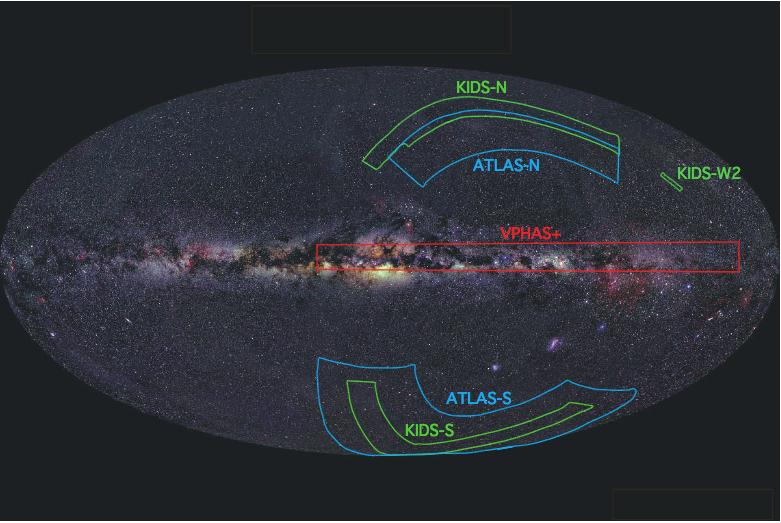
UK's Vista telescope Seeks Dark Matter and Dark Energy


Located in Chili, the UK's highly sensitive infrared camera will survey the geography of the Universe. Astronomers hope the telescope can reveal the nature of dark energy and dark matter while providing a valuable tool that others can build on.


BBC News - UK's Vista telescope takes stunning images of space

12.07.2009

A New Experiment in the Hunt for Neutrinos


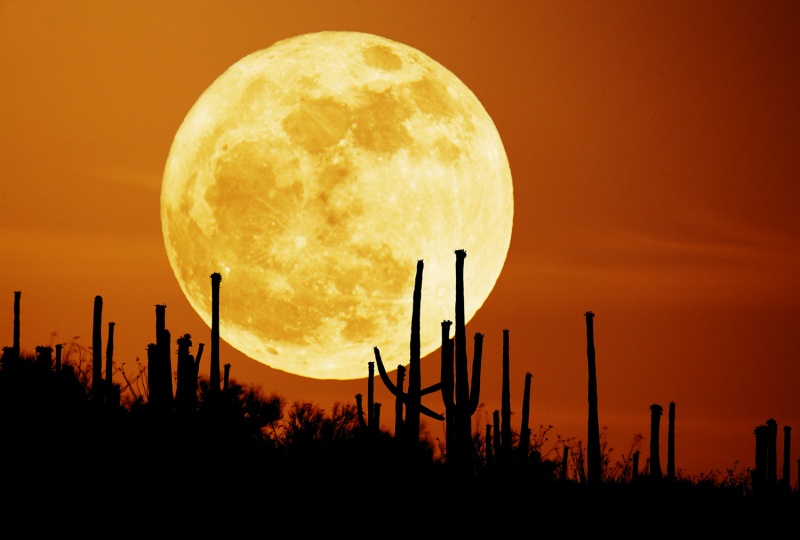
Astronomers Suspect High Energy Neutrinos Could be Detected on Moon

This article goes to show that even the largest particle collider has nothing on the moon.  In fact, scientists suggest that the moon acts as a large particle collider that can be used to detect high energy neutrinos.  Neutrinos have no electrical charge meaning that they don't react to magnetic fields.  They are difficult to detect because they pass through matter and are extremely rare.  Best case scenario for detecting neutrinos on the moon occurs only a handful of times per month.


Read more at Suite101: A New Experiment in the Hunt for Neutrinos: Astronomers Suspect High Energy Neutrinos Could be Detected on Moon | Suite101.com 

http://particle-physics.suite101.com/article.cfm/a_new_experiment_in_the_hunt_for_neutrinos#ixzz0Yz2zaX1j


Photo Credit: Berkley Labs

AddThis

Share |